
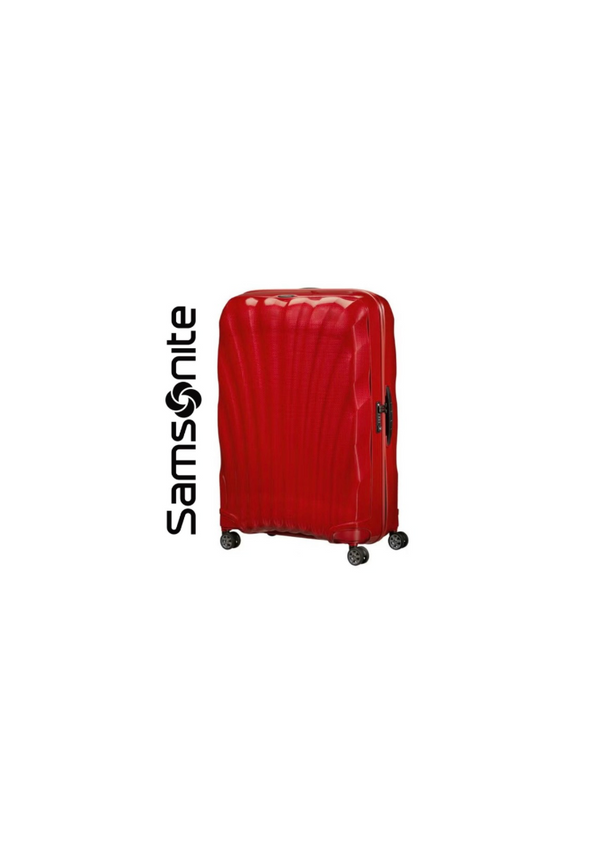

You pull your suitcase off the carousel, grab the handle and start rolling toward the exit. Then you hear it: a grinding, clunking drag from one corner. One wheel has gone, and a 10 kg case suddenly feels twice as heavy.
A broken wheel is one of the most common suitcase problems, and it rarely means the whole suitcase is finished. Below: why wheels fail, what you can safely try at home, and when it's time to bring the bag in.
Why luggage wheels break
- Rough handling. Conveyor belts, drops from the hold and hard landings on the carousel hit the wheels first.
- Worn bearings. The bearings inside each wheel wear down over time. The wheel turns stiff or wobbly before it fails completely.
- Debris. Hair, thread, sand and grit wrap around the axle, add friction and eventually jam the wheel.
- Uneven ground. Cobblestones, gravel and broken pavement put sideways stress on wheels that are built to roll straight.
- Soft plastic. Many budget cases use hard plastic wheels that crack or flat-spot sooner than rubber or polyurethane ones.
- Overpacking. Packing past the case's weight limit loads every wheel beyond what it was designed for.
Spinner wheels vs inline wheels
Before you try any fix, check which type your case has. They break differently, and they're repaired differently.
Spinner wheels (four wheels)
Spinners turn 360° so the case glides in any direction. Most hard-shell luggage uses them. Because they stick out from the corners, they take the full force of a drop — one bad landing can crack the housing or snap a wheel off.
The good news: many spinner wheel modules can be removed and replaced individually, although the mounting method varies by brand and model.
Inline wheels (two wheels)
Inline wheels are recessed into the base and only roll forwards and back. The housing protects them from drops, but they wear unevenly if you always tilt the case the same way.
Because they're built into the shell, inline wheels are harder to swap at home. This is where a workshop saves you time.
Temporary fixes you can try at home
Trip coming up and no time for a repair? These can get you through one more journey.
Clear the debris
Sometimes the wheel isn't broken at all — just jammed. Turn the case over and check each axle. Tweezers or small scissors will pull out hair and thread wrapped around the spindle. This fixes more "broken" wheels than you'd expect.
Tighten loose screws
A small Phillips screwdriver can stop a wobbling wheel in a few turns. If the screw hole is stripped, don't glue it. Glue on the screw or the parts around it can bond them together permanently, which makes a proper repair much harder later. Bring it in instead.
Lubricate a stiff wheel
A drop of silicone lubricant or sewing-machine oil on the bearing can bring back a smooth spin. Skip WD-40 here: it evaporates quickly and attracts dust.
Tape it for the trip home
If a wheel has cracked but is still attached, wrapping it tightly with duct tape or electrical tape can hold it for one more trip. It's a get-you-home fix, not a repair.
Worth knowing: a wheel that has cracked, lost its bearing or come off entirely needs replacing before it can be relied on again.
When to bring it to a workshop
- The wheel is cracked or shattered. Tape won't restore the strength of a cracked wheel. It needs a new one.
- The housing is damaged. If the part of the shell that holds the wheel has broken, the repair goes beyond swapping the wheel.
- The axle is bent. A new wheel won't sit straight on a bent axle. That needs the right tools.
- Several wheels are wearing unevenly. When one goes, the others are often close behind. We'll check all four and tell you whether a full set makes more sense than a single wheel.
- You can't find a matching wheel. Wheels aren't universal — sizes, mounts and axle types vary by brand and model. We carry parts for most major brands. If we can't match yours, we'll tell you before any work starts.
Repair or replace?
Repair usually makes sense when
- The shell, frame and handle are in good shape, whatever the brand
- The damage is limited to one or two parts — wheels, handle, zipper or lock
- The case matters to you, or it's part of a matching set
- The repair costs well under the price of a comparable new case, which for wheels it usually does
Replacing may make more sense when
- The shell has major damage — long cracks, warping or crushed corners
- Several parts have failed at once: wheels, handle and zipper
It comes down to the type and extent of the damage and the overall condition of the case, not what it originally cost. Before you decide, let us assess it. We'll tell you honestly which side of that line your bag is on, and if the repair isn't worth it, we'll say so.
Getting a wheel replaced with us
Chiang Kong has been repairing luggage since 1975, and we're an appointed repair partner for more than 40 airlines at Changi Airport.
- Any brand. Bring in whatever you travel with.
- A proper replacement. We fit a compatible wheel module, not a stop-gap.
- A once-over while it's here. We'll check the handle, zippers, locks and shell and flag anything worth knowing about.
- A free quote first. Don't like the price? Walk out with the same bag, no charge.
See current wheel prices and turnaround on our repair services page, and find the nearest workshop, with today's hours, on the workshops page.
Keep your wheels rolling longer
- Clean the wheels after each trip. Pull out debris and wipe the axles. Two minutes can save you a repair.
- Stay under the weight limit. Every extra kilo is carried by the wheels.
- Store the case upright. Lying flat with weight on top can deform the wheels over time.
- Carry it over rough ground. Lift the case over cobblestones and gravel when you can.
- Lubricate the bearings every few trips. A drop of silicone lubricant keeps them turning freely.
Wheel gone? Send us a photo
Send a photo of the damage on WhatsApp and we'll tell you what we see and what it's likely to cost. No obligation.